

24/7 emergency services
Send us email
Sat - Sun:Closed
Introduction
Hip Replacement Surgeon in Ahmedabad
A hip replacement is a surgical procedure that replaces the painful hip joint with an artificial hip joint.In a total hip replacement, the head of the femur (the bone that extends from the hip to the knee) is removed along with the surface layer of the socket in which it rests (called the acetabulum).The head of the femur, which is situated within the pelvis socket, is replaced with a metal ball and stem. This stem fits into the shaft of the femur.The socket is replaced with a plastic or a metal and plastic cup.Recently there has been a return to the earlier version of the operation when the hip was ‘resurfaced’. Rather than remove the head of the femur it is covered by a metal cover. The socket is replaced with a metal socket.
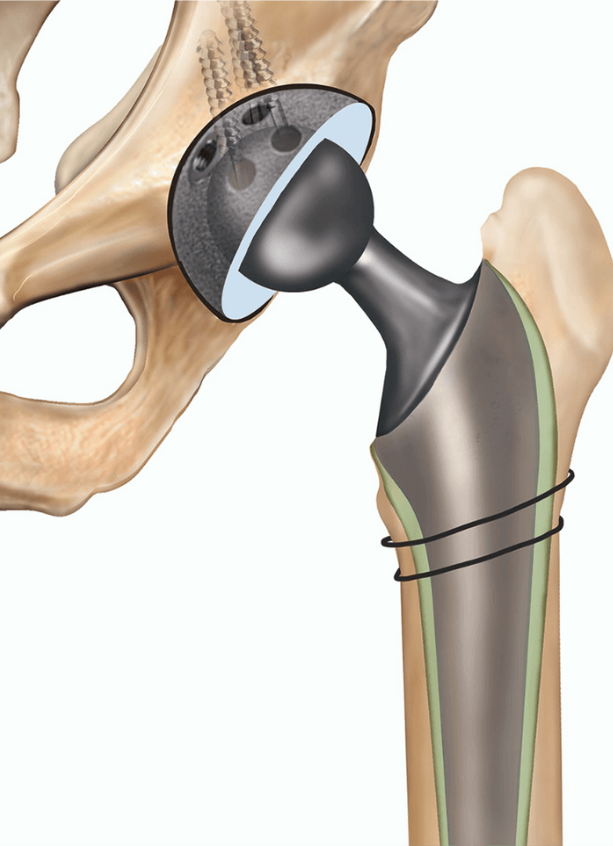
For nearly a century, doctors have been putting various materials into diseased and painful hip joints to relieve pain. Up until the 1960s, outcomes had been unreliable. At that time, the metal ball and plastic socket for the replacement of the hip joint was introduced. Today, the artificial components used in a hip replacement are stronger and more designs are available.
There are many different shapes, sizes, and designs of artificial components of the hip joint. For the most part these are composed of chrome, cobalt, titanium, or ceramic materials. Some surgeons are also using custom-made components to improve the fit in the femur. Dr. Jitendra Chowdhary is best total Hip Replacement Surgeon in Ahmedabad.

Dr. Jitendra Chowdhary
Specialist
Dr. Jitendra Chowdhary is a skilled and compassionate joint replacement specialist, dedicated to improving patients’ quality of life through advanced surgical techniques and personalized care. With a deep understanding of orthopedic medicine, the doctor combines expertise with a patient-centered approach to deliver optimal outcomes for individuals seeking joint replacement solutions.
Book Appointment
What Does Hip Replacement Surgery Involve?
The hip joint is located where the upper end of the femur meets the acetabulum. The femur, or thigh bone, looks like a long stem with a ball on the end. The acetabulum is a socket or cup-like structure in the pelvis, or hip bone. This “ball and socket” arrangement allows a wide range of motion, including sitting, standing, walking, and other daily activities.
During hip replacement, the surgeon removes the diseased bone tissue and cartilage from the hip joint. The healthy parts of the hip are left intact. Then the surgeon replaces the head of the femur (the ball) and the acetabulum (the socket) with new, artificial parts. The new hip is made of materials that allow a natural, gliding motion of the joint. Hip replacement surgery usually lasts 2 to 3 hours.
Sometimes the surgeon will use a special glue, or cement, to bond the new parts of the hip joint to the existing, healthy bone. This is referred to as a “cemented” procedure. In an uncemented procedure, the artificial parts are made of porous material that allows the patient’s own bone to grow into the pores and hold the new parts in place. Hip Replacement Doctor sometimes use a “hybrid” replacement, which consists of a cemented femur part and an uncommented acetabular part.

Working Hours
Have an emergency? Book your visit.
Monday
Tuesday
Wednesday
Thursday
Friday
Saturday
Sunday
9:00AM – 06:30PM
9:00AM – 06:30PM
9:00AM – 06:30PM
9:00AM – 06:30PM
9:00AM – 06:30PM
9:00AM – 06:30PM
9:00AM – 06:30PM
Emergency Support
Book an Appointment
Make An Appointment
FAQS
The recovery time after knee arthroscopy can vary depending on the specific procedure performed and individual factors. In general, most patients can expect to resume normal activities within a few weeks. However, it's important to note that the full recovery and return to sports or strenuous activities may take several months. Following the post-operative instructions provided by your surgeon, including physical therapy and rehabilitation exercises, will help optimize your recovery and achieve the best possible outcome.
After knee arthroscopy, your surgeon will provide specific instructions tailored to your case. It is common to use crutches for a short period to aid in walking, and you may need to wear a knee brace for stability. It's crucial to follow the recommended rehabilitation program, which may include exercises to restore strength, flexibility, and range of motion. You should avoid activities that put excessive stress on the knee joint, such as running or jumping, until cleared by your surgeon. Adhering to these precautions and restrictions will help protect your knee during the healing process.
Knee arthroscopy involves making small incisions, typically less than half an inch long. These incisions are strategically placed to minimize scarring and are often located on the sides or front of the knee. Over time, the scars generally fade and become less noticeable. In most cases, the scars from knee arthroscopy are minimal and do not cause significant cosmetic concerns.
While knee arthroscopy is a versatile procedure, it cannot address all knee conditions. The suitability of arthroscopy depends on the specific diagnosis and severity of the condition. Certain complex or extensive knee injuries or conditions may require open surgery, which involves larger incisions and a more invasive approach. An orthopedic specialist will evaluate your specific case and determine the most appropriate treatment option, whether it is arthroscopy or open surgery, to ensure the best possible outcome for your knee condition.